


Marketing might not be the first thing that comes to mind when you think about running a nonprofit. You got into this work to make a difference, not to become a marketing expert. But here is the truth: even the most meaningful mission needs the right people to hear about it. Marketing is how you connect with donors, recruit volunteers, attract sponsors, and grow your community of supporters.
The good news? You do not need a massive budget or a marketing degree to get started. With a clear plan and the right tools, any nonprofit can build a marketing strategy that actually works.
In this guide, we will walk you through a practical, step-by-step approach to nonprofit marketing. Whether you are starting from scratch or looking to refresh what you already have, these steps will help you spread your message further and bring more people into your mission.
Why Marketing Matters for Nonprofits
Let’s start with the big picture. In 2024, U.S. charitable giving reached $592.50 billion, a 6.3% increase from the previous year, according to the Giving USA 2025 report. That is a lot of generosity flowing through the sector. But it also means there is more competition than ever for donor attention.
Here is something to keep in mind: it can take 18 to 20 points of contact before a new donor decides to give. That means your nonprofit needs to show up consistently across different places, whether that is email, social media, your website, or community events.
Marketing is not about selling. For nonprofits, it is about building awareness, telling your story, and making it easy for people who care about your cause to take action.
Step 1: Build Your Marketing Plan Around Clear Goals
Every good marketing effort starts with a plan. But do not overthink this. Your marketing plan does not need to be a 50-page document. It just needs to answer a few key questions clearly.
Start by identifying what you want to achieve. Are you trying to grow your donor base? Recruit more volunteers? Raise awareness about a specific program? Attract corporate sponsors? Each goal will shape the way you approach your marketing.
Once you have your goals, think about who you are trying to reach. This is your target audience. A message aimed at young professionals will look very different from one aimed at retirees or corporate giving managers. Understanding who your supporters are (and who you want them to be) helps you create content that actually resonates.
Next, outline the basics:
– What is the main message or story you want to tell?
– Which channels will you use to share it? (We will cover this in detail later.)
– What is your timeline? Are there key dates, such as a fundraising event or Giving Tuesday, that you need to plan around?
– Who on your team is responsible for what?
A simple one-page plan with these details is a great starting point. You can always build on it later.
One important note: set a realistic budget. According to the Nonprofit Marketing Guide’s 2026 Communications Trends Report, limited budget remains one of the top challenges for nonprofit marketers. Most nonprofits allocate between 5% and 15% of their overall budget to marketing. Even a modest investment, when used strategically, can go a long way.
Step 2: Test Before You Launch
Here is a tip that big companies swear by, and it works just as well for nonprofits: test your campaign before you roll it out to everyone.
This is sometimes called a “soft launch” or a “pilot.” The idea is simple. Before you send that big email blast or launch your social media campaign to your full audience, try it with a smaller group first.
Pick a handful of loyal supporters, board members, or dedicated volunteers. Share your campaign materials with them and ask for honest feedback. Does the message make sense? Is the call to action clear? Does the donation page load properly on their phone?
This small step can save you from big headaches. Maybe your email subject line does not grab attention the way you thought it would, or your event registration link is broken. It is much better to catch these things early.
According to the 2025 M+R Benchmarks Study 80% of participating nonprofits conducted A/B testing on their email and ad messaging in 2024. But only 26% invested in pre-market testing before campaign launches. That gap represents a real opportunity. The organizations that test before they launch tend to get better results with fewer surprises.
Step 3: Track Your Results and Learn From Them
Once your campaign is live, you need to know what is working and what is not. This is where tracking and reporting come in.
You do not need to be a data expert to do this well. Focus on a few key numbers that matter most for your goals. If you are running an email campaign, pay attention to your open rate and click-through rate. (For reference, the average open rate for nonprofit emails is 28.59%, and the average click-through rate is 3.29%, according to data compiled by Nonprofit Tech for Good.) If you are active on social media, track engagement and follower growth. If your goal is donations, monitor your website conversion rate and average gift size.
The 2025 M+R Benchmarks Study found that nonprofits raised an average of $1.29 per website visitor in 2024, with a donation conversion rate of about 1.5%. Knowing your own numbers gives you a baseline to improve from.
The real value of tracking is not just in the numbers themselves. It is in what you learn. For example, if your emails get opened but nobody clicks, your subject line is working but the content or call to action might need a rethink. If your social media posts get lots of likes but few donations, you might need to strengthen the connection between your content and your fundraising ask.
A good CRM (Customer Relationship Management) tool makes this much easier. Instead of juggling spreadsheets and separate platforms, a CRM brings your donor data, volunteer information, campaign results, and communications into one place. GiveLife365, for example, is a CRM built specifically for nonprofits. It helps you track donor relationships, manage volunteers, run events, handle memberships, and pull impact reports, all from a single dashboard powered by the Microsoft power platform. When all your data lives in one place, spotting trends and making smart decisions becomes much simpler.
The important thing is to review your results regularly, not just at the end of a campaign. Check in weekly or biweekly so you can make adjustments while your campaign is still running.
Step 4: Choose the Right Channels for Your Audience
With so many ways to reach people today, it is tempting to try to be everywhere at once. But spreading yourself too thin is one of the most common mistakes nonprofits make.
The better approach? Focus on a few channels where your audience actually spends time, and do those well.
Here is a look at some of the most effective channels for nonprofits right now:
Email Marketing
Email continues to be one of the most powerful tools in a nonprofit’s toolkit. 86% of nonprofits use email marketing, and 33% of donors say email is what most inspires them to give, according to the 2025 Nonprofit Tech for Good Report.
What makes email so effective is its personal, direct nature. You are showing up right in someone’s inbox. To make the most of it, keep your emails personal and relevant. Emails with personalized subject lines are 26% more likely to be opened. And here is an interesting detail: welcome emails have an average open rate of 80%, so make that first impression count.
One more thing: 53% of emails are now opened on mobile devices. Make sure your emails look great on a phone screen, not just a desktop.
Social Media
Social media is where many of your supporters, especially younger ones, discover and engage with causes they care about. But not every platform is right for every nonprofit.
Here is a quick snapshot of where nonprofits are finding their audiences, based on the 2025 Nonprofit Tech for Good Survey:
– Facebook: Used by 93% of nonprofits. It has a massive user base of over 3 billion monthly users, but organic reach has dropped to about 2.2%, which means you may need to invest in paid posts to reach more people.
– Instagram: Used by 85% of nonprofits worldwide. It has a much higher organic reach rate of 15.3% and an engagement rate of 0.623%, making it a strong platform for visual storytelling.
– LinkedIn: Used by 81% of nonprofits. Especially useful for connecting with corporate sponsors and professional supporters. 42% of U.S. donors use LinkedIn to research nonprofits before giving.
– TikTok: Still newer for nonprofits (15% adoption), but it is growing fast, with a 37% increase in follower counts in 2024 and a 7.5% engagement rate, the highest of any platform.
The key takeaway? You do not need to be on every platform. Pick two or three where your supporters are most active and focus your energy there.
Your Website
Your website is your nonprofit’s home base online. It is often the first place a potential donor, volunteer, or sponsor visits to learn about you. And first impressions matter.
Here are a few things to keep in mind: 68% of online donors trust websites with a .org domain most, according to Nonprofit Tech for Good. Desktop visitors still generate the majority of donation revenue (55% of transactions and 70% of revenue), but mobile traffic makes up nearly half of all visits. That means your site needs to look good and work smoothly on both desktop and mobile.
Make sure your donation page is easy to find, fast to load, and simple to use. Every extra step or confusing form field is a chance for someone to leave before completing their gift.
Direct Mail and Print
Do not count out traditional channels entirely. 16% of donors say print communication is what keeps them engaged, and for certain audiences, especially older supporters, a physical letter or postcard can stand out in a way that digital messages sometimes do not.
The most effective approach for many nonprofits is a mix of digital and traditional channels, sometimes called a “multichannel” strategy.
Step 5: Keep Testing, Keep Improving
Marketing is not a one-and-done effort. The nonprofits that see the best results are the ones that treat their marketing as an ongoing process of learning and improvement.
After each campaign or at the end of each quarter, take time to review what happened. Which emails got the most opens? Which social media posts drove the most engagement? Where did your donations actually come from?
The 2025 M+R Benchmarks Study found that monthly giving revenue grew 5% in 2024 and now accounts for 31% of all online revenue for nonprofits. That is a significant shift, and it shows that strategies like recurring giving campaigns are worth investing in. But you will only discover what works best for your organization by paying attention to your own data.
Here are a few things to revisit regularly:
– Which channels are driving the most engagement and donations for you?
– Are there channels you should add? For example, if you are not using Instagram yet but your audience skews younger, it might be time to start.
– Are there channels that are not performing? It is okay to pause or step away from a platform that is not delivering results. For instance, 13% of nonprofits are planning to leave or sunset their X (formerly Twitter) accounts, according to the M+R Benchmarks Study.
– Is your messaging still relevant? Your audience’s needs and interests change over time. What worked two years ago might not resonate today.
Putting It All Together
Nonprofit marketing does not have to be overwhelming. At its core, it is about getting clear on your goals, understanding your audience, showing up consistently on the right channels, and paying attention to what the data tells you.
To recap:
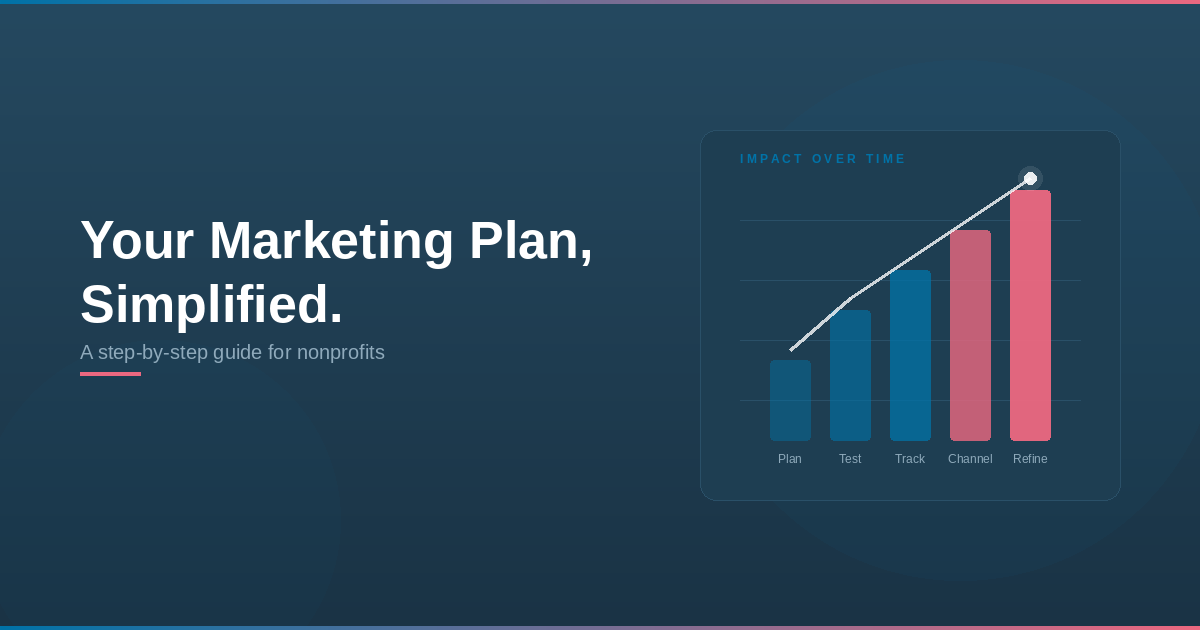
1. Start with a clear, realistic plan tied to specific goals.
2. Test your campaigns with a small group before going big.
3. Track your results and use what you learn to improve.
4. Focus on the channels where your audience actually spends time.
5. Keep refining your approach over time.
And remember, you do not have to do it all manually. Tools like GiveLife365’s nonprofit CRM can help you manage your donor relationships, track campaign performance, coordinate volunteers, and report on your impact, all in one place. When you spend less time on admin work, you have more time and energy for what really matters: your mission.
Ready to see how a nonprofit CRM can simplify your marketing and operations? Book a free demo of GiveLife365 and find out how it can help your organization grow.
